|
-
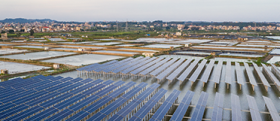
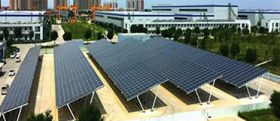
olar power generation is divided into solar thermal power generation and photovoltaic power generation. Usually said solar power generation refers to solar photovoltaic power generation, referred to as "photoelectric". Photovoltaic power generation is a technology that converts light energy directly into electrical energy by using the photovoltaic effect of semiconductor interface. The key element of this technology is the solar cell. After the solar cells are packaged and protected in series, a large area of solar cell modules can be formed, and then combined with the power controller and other components to form a photovoltaic power generation device. In theory, photovoltaic power generation technology can be used for any occasion that needs power, from spacecraft to household power supplies, large to megawatt power stations, small to toys, photovoltaic power is everywhere. The most basic component of solar photovoltaic power generation is the solar cell (sheet), which has monocrysta
-
Photovoltaic power generation is based on the principle of photovoltaic effect, the use of solar cells to directly convert solar energy into electricity. Whether it is independent use or grid-connected power generation, photovoltaic power generation system is mainly composed of solar panels (components), controllers and inverters, which are mainly composed of electronic components, do not involve mechanical parts, so photovoltaic power generation equipment is extremely refined, reliable and stable long life, easy installation and maintenance. In theory, photovoltaic power generation technology can be used for any occasion that needs power, from spacecraft to household power supplies, large to megawatt power stations, small to toys, photovoltaic power is everywhere. The efficiency of domestic crystalline silicon cells is about 10 to 13%, and the efficiency of similar foreign products is about 12 to 14%. A solar panel composed of one or more solar cells is called a photovoltaic module.
-
Since 2006, crystalline silicon modules have accounted for more than 80% of the global photovoltaic application market, accounting for the dominant position in photovoltaic applications. As the mainstream of the current photovoltaic market, crystalline silicon photovoltaic technology has also been seeking breakthroughs in conversion efficiency. From double-glass modules, high-efficiency photovoltaic modules to concentrated photovoltaic, technology has been constantly iterating forward. The following is a detailed introduction to several emerging crystalline silicon photovoltaic technologies.
-
In the 1960s, the new concept of ecological architecture was first proposed.
In 1970, the oil crisis made solar energy, geothermal energy, wind energy and other building energy saving technologies came into being, and energy-saving buildings became the forerunn of building development.
In 1980, the World Conservation Organization for the first time put forward the slogan of "sustainable development", while the energy-saving building system has gradually improved, and is widely used in Germany, Britain, France, Canada and other developed countries;
In 1987, the United Nations Environment Programme published the report "Our Common Future", which established the idea of sustainable development.
In 1990, the world's first green building standard was issued in the UK.
-
Domestic BIPV is ready to start, open a new era of photovoltaic application According to the "building energy efficiency and green number of development" 13th Five-Year Plan ", by 2020 building ultra-low energy consumption, near zero energy building projects reach more than 10 million square meters. BIPV (photovoltaic building integration) is a key technical factor to solve the energy demand of near-zero energy buildings. With the rapid reduction of the cost of photovoltaic industry chain in recent years, photovoltaic buildings have the value of commercial application. From the early household photovoltaic to BIPV, the industry from policy dependence to the era of no subsidies, the rise of spontaneous market demand will open a broad space for the development of BIPV. However, when it comes to the technical aspects of BIPV, many common problems in the industry still need to be further overcome. From manufacturing to construction to operation and maintenance, there are thousands of domes
-
Photovoltaic building integration (BIPV) is a key technology to solve the energy demand of near-zero energy buildings. With the successive launch of photovoltaic building materials, BIPV market is expected to achieve new breakthroughs. According to the National Bureau of Statistics, China's photovoltaic installation area of more than 3 billion square meters, and the annual newly completed area of more than 4 billion square meters. If the BIPV penetration rate of 2% is conservatively applied, the BIPV industry market space of new buildings will be nearly 100 billion yuan per year. If the existing building renovation needs are considered, the long-term space of the total BIPV market is expected to reach trillions of levels. In addition, in recent years, China has intensively introduced policies to promote the development of zero-energy buildings, providing possibilities for BIPV as
|
|